
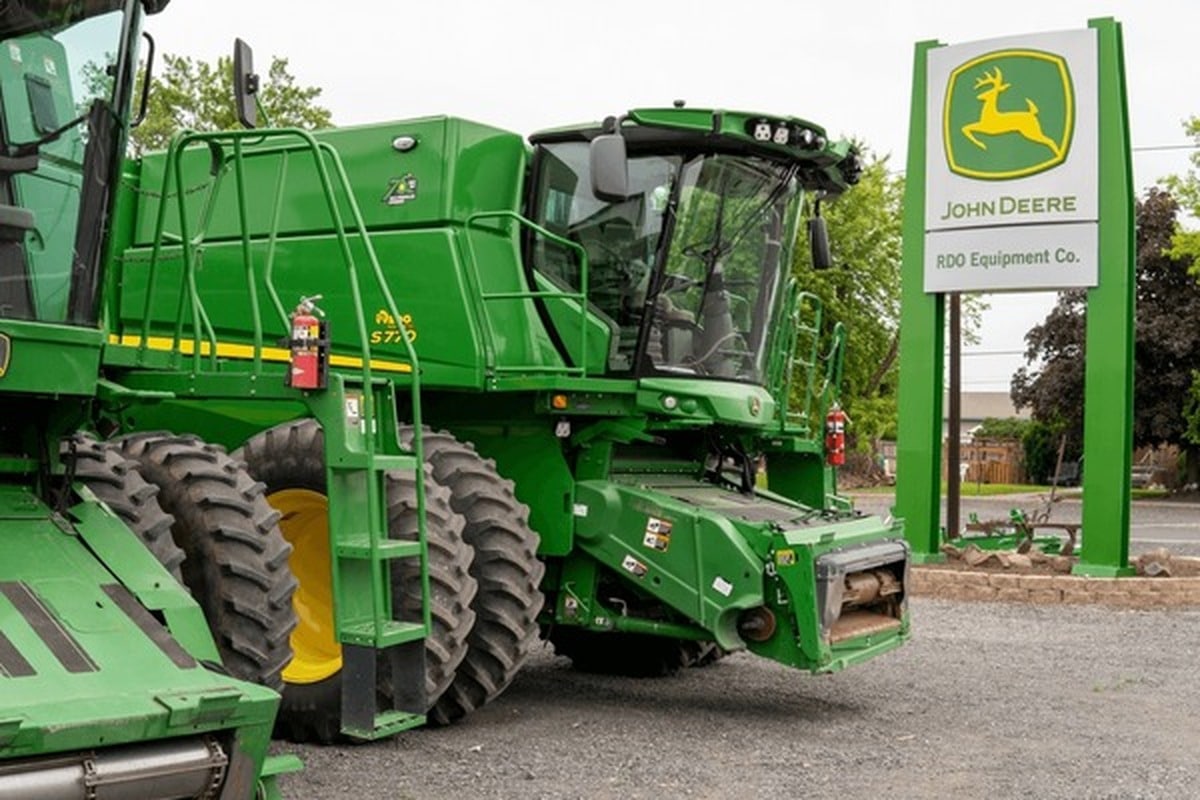
The John Deere 9600 has earned — and kept — a strong reputation on farms across the United States. Introduced as part of Deere’s Maximizer series, the 9600 combined practical capacity with straightforward mechanics and dealer support. Even decades after its production run, farmers still choose the 9600 for specific jobs and budgets. Below I explain the main reasons why, backed by manufacturer specs, owner experience, and current market data.
Quick overview: what the 9600 is and when it was made
The 9600 is a walker-type combine in John Deere’s 9000 “Maximizer” family, designed for large-acreage harvesting with a rear-mounted engine and center cab layout. It was produced in the 1990s (the 9600 line ran through the mid- to late-1990s before Deere moved to later series models).
1. Proven durability and simple, serviceable design
Farmers often prefer machines they can maintain themselves between dealer visits. The 9600’s mechanical simplicity — compared with more electronics-heavy modern combines — makes it approachable for conservative shops and owner-operators. Field mechanics can access major components, perform routine servicing, and rebuild common wear items without specialized diagnostic tools. That straightforward serviceability translates to lower downtime and predictable operating costs during busy harvest windows.
2. Strong harvesting capacity for its era
When new, the 9600 offered competitive throughput for large grain operations: adequate engine power, a roomy grain tank and a wide header compatibility that let operators cover ground efficiently. Those features made it attractive to multi-crop farms (corn, soy, small grains) that needed consistent daily capacity without the purchase price of late-model rotary combines. Modern used listings show farmers still value those capacity characteristics when shopping within a budget.
3. Excellent parts and dealer support (even for used machines)
Because John Deere sold many 9600s and because the 9000 series shares service parts with later models, dealers and aftermarket suppliers still carry a broad range of replacement parts and wear items. That parts ecosystem reduces the risk of long lead times for repairs — a major practical advantage in harvest season. In short: the supply chain for parts keeps older machines farm-ready.
4. Predictable operating costs and resale value
Used 9600s occupy a price band that makes sense for farms expanding capacity on a budget. Listings show a wide price range driven by hours, condition, and optional equipment, but availability on reputable equipment pages indicates a steady resale market — an important consideration for farmers who rotate machines or upgrade incrementally. In practice, farmers can budget maintenance and depreciation more reliably with a well-chosen 9600.
5. Operator comfort and practical controls (for its time)
The Maximizer series (including the 9600) introduced cab layout and comfort upgrades that operators still appreciate: center-mounted cab for a better work view, intuitive controls, and straightforward monitoring instruments. For operators who spend long hours at harvest, comfortable ergonomics and predictable controls reduce fatigue and mistakes — both productivity boosters.
6. Real-world farmer approval — field-proven performance
Owner forums and independent reviews consistently show farmers praising the 9600 for fuel economy, build quality, and dependable day-to-day performance. Naturally, those endorsements come with caveats tied to maintenance history and hours, but overall field testimony explains why used 9600s continue to trade actively.
Common limitations and what to watch for
No machine is perfect. Honest buyers and operators should be aware of typical age-related issues:
- Wear on walker components and concaves: Owners report that after many separator hours, walker bearings and concaves may require attention. Regular inspections and pre-season refurbishment prevent surprises.
- High-hour rebuild needs: Like any heavy-use combine, major rebuilds typically appear as total hours climb into the high thousands. Evaluate separator hours and service records carefully.
- Less-smooth handling in some crops: Walker-style combines can be less gentle on certain downed or high-moisture crops compared with modern rotary designs; match the machine to your crop and harvest conditions.
Practical buying checklist for U.S. farmers
If you’re evaluating a used 9600, use this checklist to reduce risk:
- Confirm separator hours and engine hours (separator hours tell more about actual threshing wear). Ask for maintenance logs.
- Inspect walker bearings, concaves, chains, and sieves for excessive wear or previous repairs.
- Check the grain tank and unloading auger condition for dents, seals, and smooth operation.
- Review hydraulic systems and header hookups — confirm there are no leaks and that header engagement works cleanly.
- Confirm parts availability from local dealers or trusted aftermarket suppliers before committing.
Who the 9600 is right for today
The John Deere 9600 suits farmers who need reliable harvesting capacity at a modest purchase price and who either have the ability to perform routine maintenance themselves or who have dependable dealer support nearby. It’s particularly attractive as a second combine, a budget-conscious primary machine for mid-sized farms, or as a backup for peak harvest periods.
Final thoughts
The enduring popularity of the John Deere 9600 comes down to a balanced mix of capacity, simplicity, dealer support, and a track record in real field conditions. It won’t replace the highest-capacity, electronics-rich combines built today — but for many U.S. farmers, it provides dependable performance, manageable costs, and a parts network that keeps harvests moving.